
The practical answer
An equipment history needs a stable identity and an explicit movement handover.
A projector moves between classrooms, a set of practical equipment is shared by departments and a replacement item arrives with a different supplier reference. The inventory may still contain all the rows, yet staff cannot reliably connect an item to its history. Useful equipment records need an identity that survives changes of room, owner and supplier description.
This article focuses on record organisation and handovers. The school should use applicable requirements and competent advice to determine inspection, maintenance and use arrangements for each type of equipment. In England, the Department for Education's estate health and safety guidance provides a primary reference for estate responsibilities and supporting records. It does not make one inventory process suitable for every item.
Give the item a stable identity
Use a school identifier that staff can recognise and connect to the physical item through the approved labelling approach. Record the manufacturer's serial number where useful, but do not rely on a model name alone. Several identical items may have different histories and locations.
Keep a plain-language description beside the identifier. Someone reporting a concern should not need to understand the supplier's catalogue terminology. Include enough information to distinguish similar items while avoiding a description so long that staff ignore it. The combination of identifier, description and current location is usually more useful than any one field alone.
For sets of equipment, decide how the school needs to track them. Some sets may be managed together; other items may need individual records because their history or movement matters separately. Make that decision with the responsible people rather than assuming every object needs the same level of administration.
Distinguish home location from current location
An item's usual room and its present location may differ. If equipment moves frequently, record the arrangement in a way staff can maintain during ordinary work. An elaborate system that nobody updates will soon be less useful than a simpler process used consistently.
Identify who updates the location and when. This might be the person issuing the item, the receiving department or a designated administrator under the school's procedure. Avoid a shared assumption that the other person will do it. A brief handover can confirm the item, its destination and the expected return arrangement.
Keep availability separate from physical location. Knowing where an item is does not establish that it is ready for use. The school may have an open concern or an applicable restriction recorded elsewhere. Make the approved status understandable without asking users to search several unrelated folders.
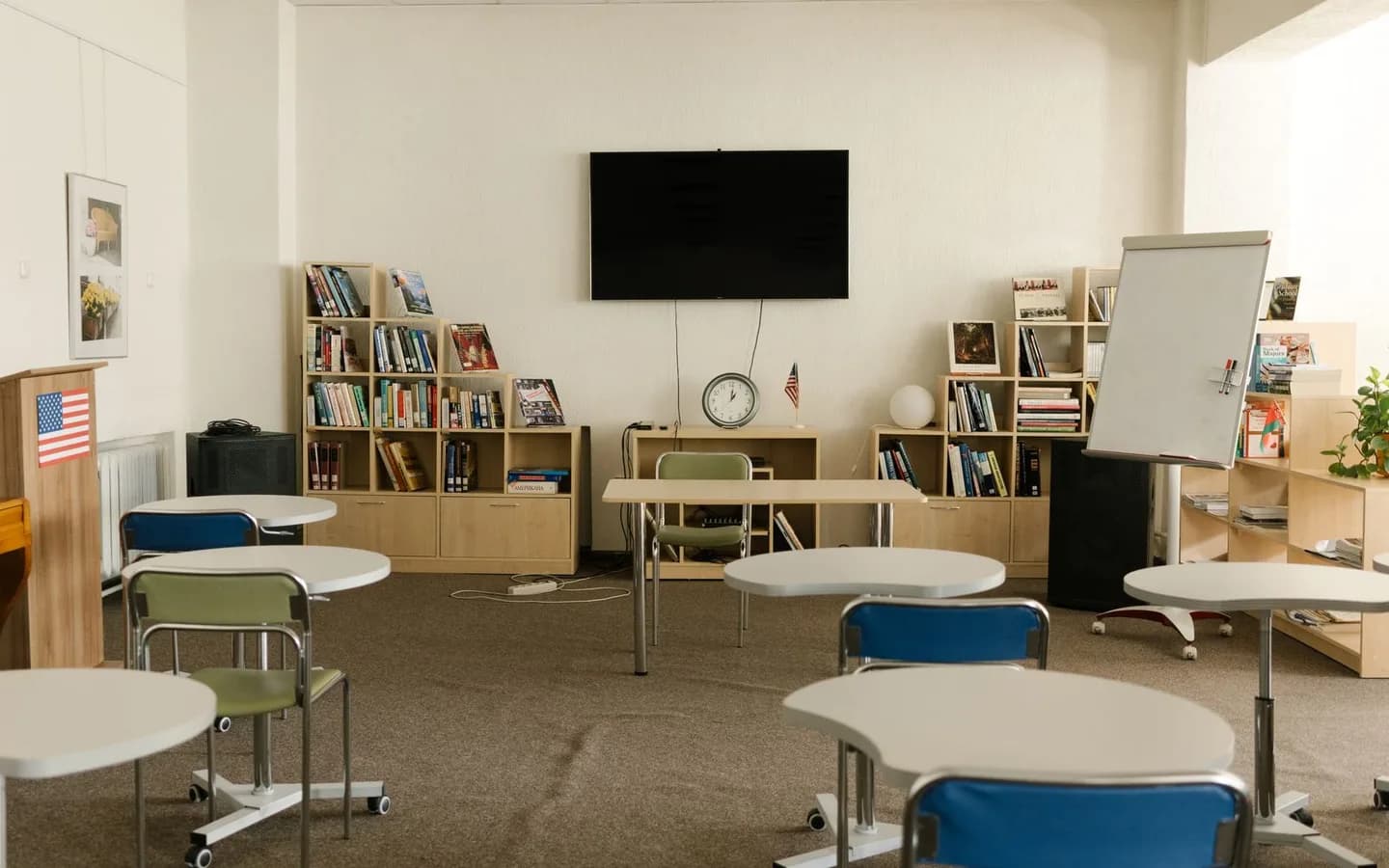
Equipment records need to follow items when rooms and teaching arrangements change. Photo: Mikhail Nilov / Pexels.
Connect the record to observations and service history
When staff report a concern, include the equipment identifier where it can be obtained appropriately. Preserve the factual observation and route the issue through the school's normal process. Do not ask the reporting colleague to diagnose a fault simply because the inventory contains technical fields.
When a service report arrives, check which items it covers. A report naming the department may not identify every item expected in the visit. Resolve mismatches with the supplier and the responsible reviewer. Keep receipt, review and any resulting action distinguishable so the record reflects what has actually happened.
Preserve older identifiers when a supplier or school numbering system changes. A simple cross-reference can prevent earlier reports from becoming disconnected. Do not silently reuse an identifier for a different replacement item if that would make the history misleading. The next reviewer should be able to tell which record belongs to which physical equipment.
Make a loan handover proportionate
For equipment shared between teams, agree the information needed at issue and return. This might include the item reference, receiving role, location and any relevant approved instructions. The aim is to maintain responsibility and a usable history, not produce a lengthy form for every ordinary movement.
Explain how the receiving colleague reports an unexpected condition. A loan record should point to the school's established route and responsible contact. If the item cannot be used as planned, make the decision and alternative arrangement through the appropriate process. Do not let the pressure of a lesson become an informal permission to ignore an unresolved concern.
On return, check that the record reflects the actual handover. If equipment goes directly to another department, capture that movement rather than recording a return to the store that never occurred. This makes later retrieval possible and prevents staff from searching the wrong place.

A short issue and return record can preserve location and responsibility without excessive paperwork. Photo: Sora Shimazaki / Pexels.
Review records after replacement or disposal
When an item is replaced, connect the new purchase to its own identity and relevant records. Preserve the distinction between the old item's history and the new one. A supplier may send the same model, but the inspection or maintenance history does not automatically transfer with the model name.
Use the school's approved process for disposal, transfer and any information held on equipment. Update the inventory so an item no longer present does not continue to appear in schedules or availability searches. Keep whatever evidence the approved retention approach requires, with its status clear to future readers.
Run a small retrieval test. Choose a few items that move often and ask whether staff can identify their location, current responsible role and relevant record. Investigate discrepancies before expanding the system. If updates are repeatedly missed at one handover point, simplify that step or clarify ownership.
Resolve an unidentified item without guessing
Sometimes an item appears in a room without a readable label or a clear history. Record what is known and refer it through the school's agreed process. Do not attach the nearest similar record simply to complete the inventory. A plausible match can create a misleading history that later staff trust.
Use available identifiers, purchase records and relevant colleagues to establish the connection where appropriate. Keep uncertainty visible until the responsible person resolves it. Any decision about use should follow the school's procedures and relevant competent advice, separately from the administrative effort to identify the item.
Once the identity is established, update the record and examine why the connection was lost. The issue may be an unclear loan handover, an old naming convention or a replacement that was never recorded. Fixing that specific step helps prevent another unidentified item without requiring a more elaborate system for equipment that is already tracked reliably.
A useful inventory earns trust through accurate ordinary use. Asset Management within CerthixED is relevant to a demonstration involving a moved item and its history. Read School facilities inspections for the observation process and School compliance records for handling the supporting documents.
← Back to the blog